

Key Points
- Approvals for new H-1B employment at Infosys rose from 257 in FY2025 to 2,088 in FY2026—a nearly eightfold increase—in U.S. Citizenship and Immigration Services (USCIS) employer data analysed by The Dallas Express, with Richardson, Texas, listed as the petitioner city.
- Federal employer data does not establish that all sponsored workers are employed in the Dallas–Fort Worth area or that American workers lost jobs to foreign employees.
- Other major North Texas-listed employers recorded higher new-employment H-1B approvals between FY2025 and FY2026, including KPMG LLP (75 to 234), Texas Instruments (50 to 125), and American Airlines in Fort Worth (60 to 69), whereas UT Southwestern Medical Center fell from 124 to 102 and Dallas Independent School District saw new-employment approvals drop from 73 to 39 while continuing-employment approvals rose from 155 to 210.
- Texas Governor-elect Gina Hinojosa stated in a 18 November 2026 interview with The Texas Tribune that she plans to rescind outgoing Governor Greg Abbott’s 27 January 2026 directive—scheduled to run through 31 May 2027—that requires covered state agencies and public universities to obtain written approval from the Texas Workforce Commission before filing new H-1B petitions.
- Abbott’s directive does not directly cover private-sector companies such as Infosys, and Hinojosa has not yet set out replacement safeguards or reporting rules while noting concerns over programme misuse and local teacher shortages in school districts.
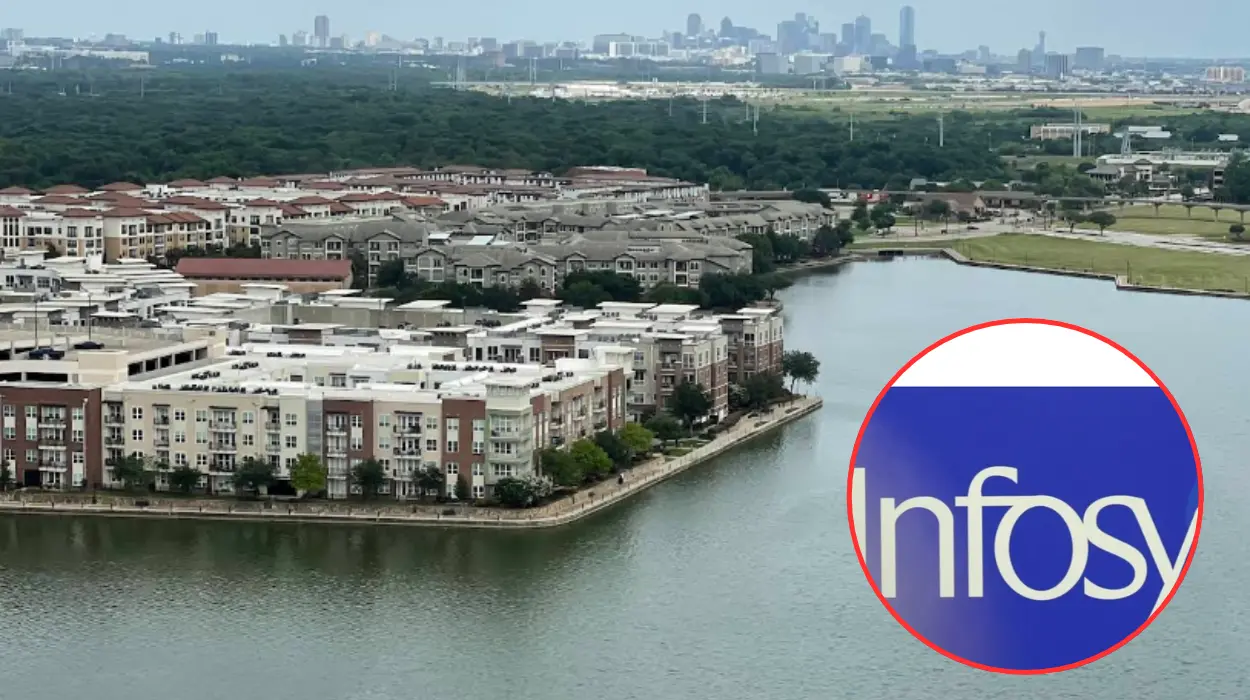
Richardson (Edition Online) November 27, 2026 – Approvals for new H-1B employment at Indian information technology firm Infosys rose nearly eightfold from 257 in FY2025 to 2,088 in FY2026, according to U.S. Citizenship and Immigration Services (USCIS) employer records analysed by The Dallas Express. The records list Richardson, Texas, as Infosys’s petitioner city, though the figures do not show where every sponsored worker is placed or indicate displacement of American workers. The data emerges as Texas Governor-elect Gina Hinojosa plans to reverse outgoing Governor Greg Abbott’s directive restricting new H-1B sponsorship at covered state agencies and public higher-education institutions.
- Key Points
- How Did Infosys and Other North Texas Employers Compare in USCIS H-1B Data?
- What Are the Terms of Greg Abbott’s H-1B Order and Which Employers Are Covered?
- What Did Governor-Elect Gina Hinojosa Say About Reversing the Directive?
- Background: How Do H-1B Sponsorship Rules and Texas State Directives Intersect?
- Prediction: How Will This Development Affect Public Institutions, Private Employers, and Job Seekers in Texas?
How Did Infosys and Other North Texas Employers Compare in USCIS H-1B Data?
According to USCIS employer data analysed by The Dallas Express and reported by outlets including Hindustan Times, India.com, and The Times of India, Infosys’s approvals for new H-1B employment increased from 257 in FY2025 to 2,088 in FY2026. Infosys is listed in the federal records with Richardson, Texas, as its petitioner city.
As reported by Hindustan Times and India.com, the federal figures do not establish that all sponsored workers are employed in the Dallas–Fort Worth area or that American workers lost jobs to foreign employees. Industry analysis of the USCIS H-1B Employer Data Hub also notes that petitioner city entries reflect employer filing records rather than confirming the specific city or state where each individual beneficiary works, and that petition approval counts track approved filings rather than proving unique headcount or current job openings.
Several other major employers associated with North Texas also recorded increases in new-employment H-1B approvals between FY2025 and FY2026 in the USCIS data analysed by The Dallas Express:
- KPMG LLP: New-employment approvals rose from 75 in FY2025 to 234 in FY2026.
- Texas Instruments: New-employment approvals increased from 50 in FY2025 to 125 in FY2026.
- American Airlines (Fort Worth): New-employment approvals moved from 60 in FY2025 to 69 in FY2026.
By contrast, other North Texas institutions experienced different trajectories between FY2025 and FY2026:
- UT Southwestern Medical Center: Approvals declined from 124 to 102.
- Dallas Independent School District: New-employment approvals fell from 73 to 39, while continuing-employment approvals increased from 155 to 210.
What Are the Terms of Greg Abbott’s H-1B Order and Which Employers Are Covered?
Outgoing Texas Governor Greg Abbott issued a directive on 27 January 2026 requiring covered state agencies and public higher-education institutions to obtain written permission from the Texas Workforce Commission before filing new H-1B sponsorship petitions. Under the directive, the restrictions are scheduled to remain in effect through 31 May 2027.
The order also requires affected institutions to document efforts to recruit qualified Texas applicants and submit disclosures regarding their H-1B sponsorship activities, including job classifications, countries of origin, and recruitment documentation. However, the state freeze applies to covered state agencies and public universities—not directly to private-sector employers such as Infosys or other commercial companies operating in Texas.
What Did Governor-Elect Gina Hinojosa Say About Reversing the Directive?
In a 18 November 2026 interview with The Texas Tribune, Governor-elect Gina Hinojosa stated that she plans to rescind Abbott’s freeze on hiring H-1B visa holders at state agencies and public universities.
As reported by The Texas Tribune (and cited in coverage by Big Bend Sentinel and Texas Scorecard), Hinojosa said: “I’m not doing culture wars. That’s not what I was elected to do”.
While pledging to lift the blanket freeze on public institutions, Hinojosa acknowledged concerns regarding misuse of the visa programme and pointed to recruitment challenges faced by school districts. As reported by The Texas Tribune and Texas Scorecard, Hinojosa stated: “There are abuses when it comes to H-1Bs, absolutely”.
She also stated that companies should not receive job-related tax breaks and use those funds to hire H-1B workers, while noting that school districts turn to H-1B teachers because they struggle to recruit enough educators locally—a gap she said she aims to address by building a pool of qualified teachers within Texas. Hinojosa has not yet detailed what replacement hiring safeguards or reporting requirements, if any, would follow a reversal.
Background: How Do H-1B Sponsorship Rules and Texas State Directives Intersect?
The H-1B visa programme is a federal immigration classification that enables U.S. employers to sponsor foreign professionals in specialty occupations—commonly in technology, engineering, science, healthcare, and education—subject to federal statutory caps, wage and attestation rules, or cap-exempt status for qualifying institutions such as certain universities and research organisations. Employer-level approval figures published by USCIS track petition adjudications across fiscal years (1 October through 30 September), covering new employment as well as continuing employment such as extensions or amendments.
In Texas, state policy disputes around H-1B sponsorship have centred on public-sector workforce rules, state oversight through the Texas Workforce Commission, local recruitment of teachers and technical staff, and debate over state incentives and public-sector hiring priorities. Because Abbott’s January 2026 order governs covered state agencies and public universities rather than private businesses, private employers such as Infosys, KPMG LLP, Texas Instruments, and American Airlines operate under federal immigration rules and parallel market conditions even as state-level policy toward public institutions remains contested.
Prediction: How Will This Development Affect Public Institutions, Private Employers, and Job Seekers in Texas?
For Texas state agencies, public universities, and school districts, a reversal of the state freeze on new H-1B petitions would remove the requirement to seek prior written approval from the Texas Workforce Commission before filing new sponsorship applications, potentially easing recruitment for specialised roles and classrooms where local hiring is constrained. Until Hinojosa specifies any new reporting rules or oversight standards, administrators and human-resources leaders at public institutions face uncertainty over what documentation or compliance steps may replace Abbott’s existing requirements.
For private-sector employers and technology, consulting, aviation, and healthcare organisations in North Texas—including firms listed in Richardson, Dallas, and Fort Worth—federal USCIS rules and business demand continue to govern sponsorship activity, though heightened public scrutiny around H-1B usage and state incentives may keep workforce and recruiting policies under close watch. For domestic and international job seekers, educators, and prospective H-1B applicants in Texas, policy shifts at public institutions and high-visibility federal approval numbers will shape where sponsored roles are available, while domestic workforce pipelines and recruitment practices remain a central point of debate.